A craft on the heritage list. A maker who carries it.
The Wuyi rock tea (Da Hong Pao) making technique was named to China's first national list of intangible cultural heritage in 2006 (item VIII-63), and in 2022 became part of UNESCO's inscription of traditional tea processing in China. At Kings Tea (Qingshenge) it is practised under chief tea maker Liu Dexi, whom the Wuyishan Municipal People's Government named a representative inheritor of the technique on 20 March 2015.
Last updated
Who makes the tea?
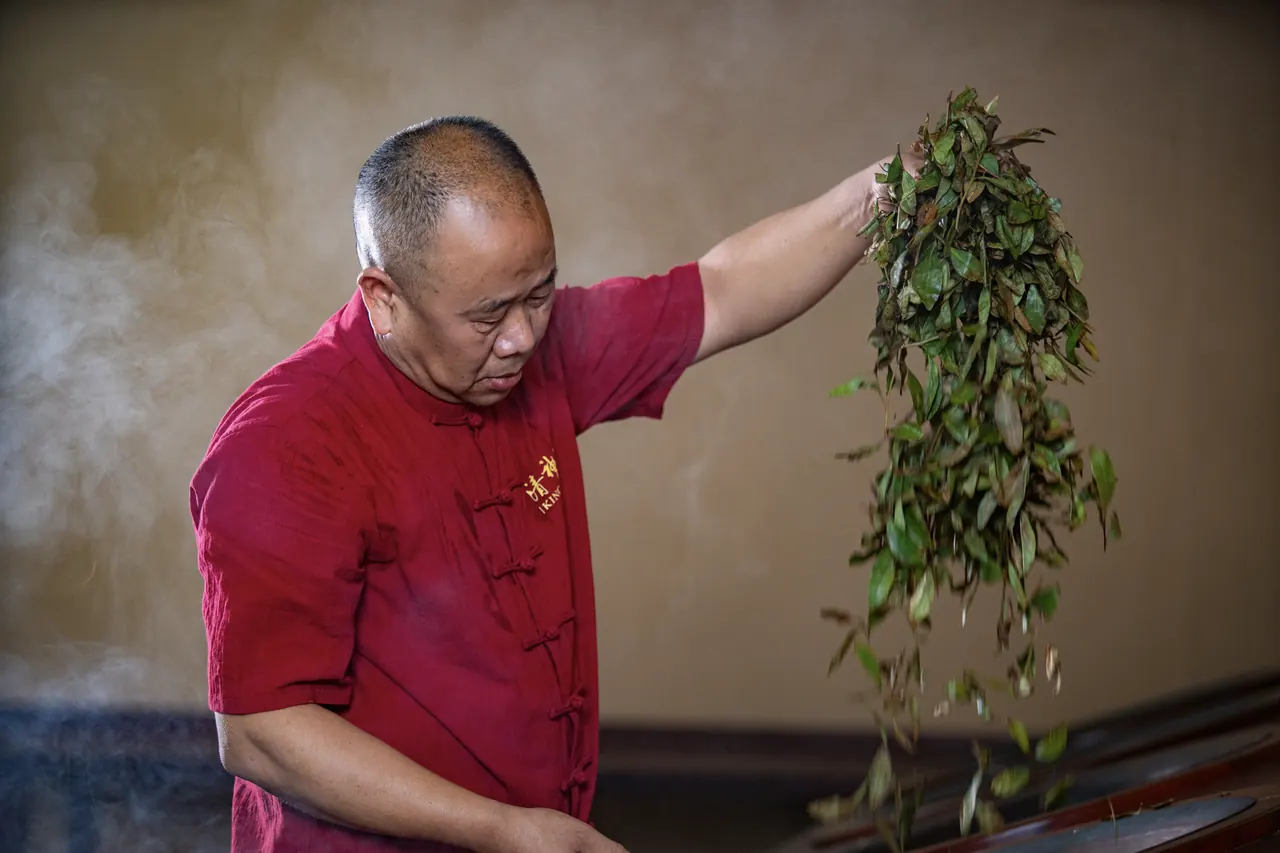
Liu Dexi 刘德喜
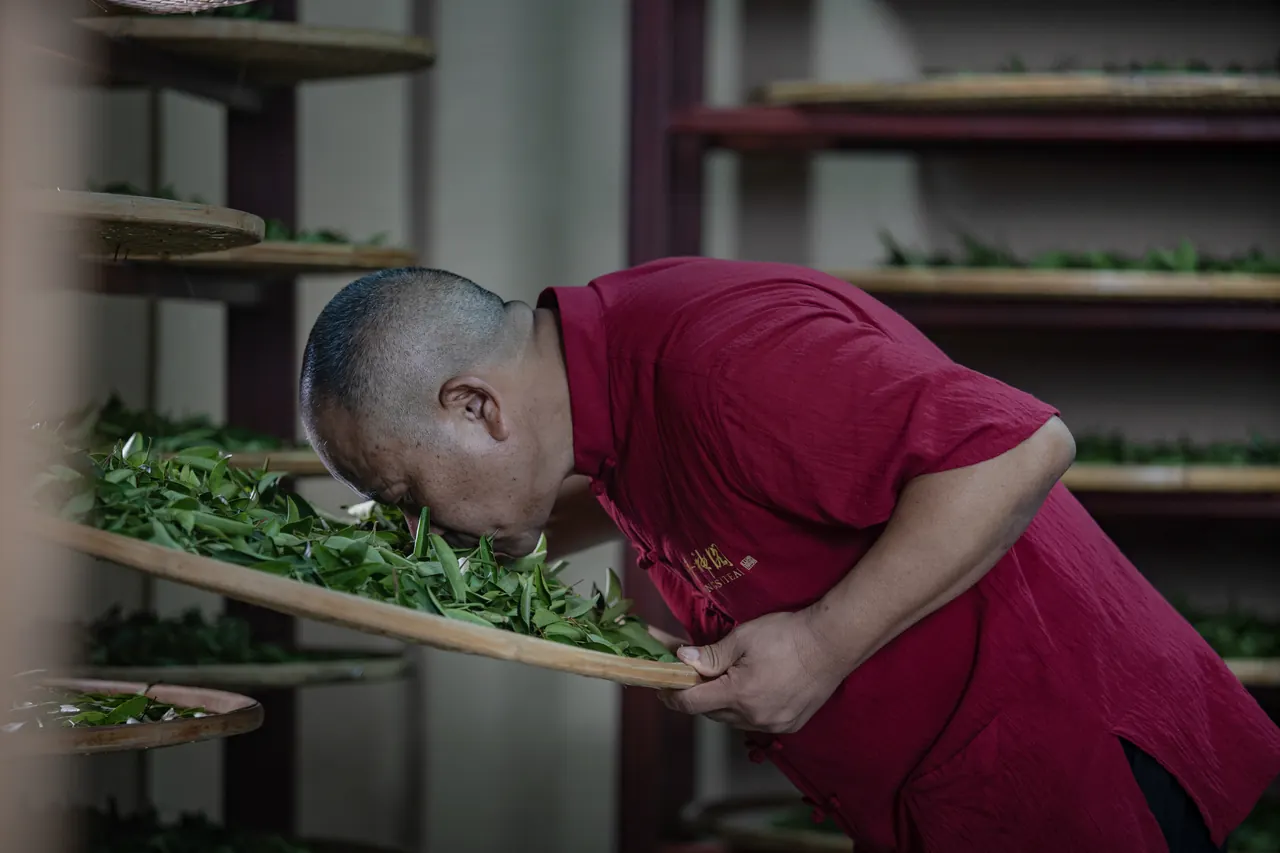
Liu Dexi has been factory director and chief tea maker at Kings Tea since February 2005. He decides when each batch is shaken, fired and roasted, and he leads the tasting table where batches are graded.
On 20 March 2015, the Wuyishan Municipal People's Government named six people as the second batch of representative inheritors of the Wuyi rock tea (Da Hong Pao) making technique (decision Wu Zheng Zong [2015] No. 34). Liu Dexi is one of them. It is a municipal recognition: the city that is home to Wuyi rock tea naming the people it trusts to carry the craft on.
Representative inheritors are expected to practise the technique, train others in it and help record it.
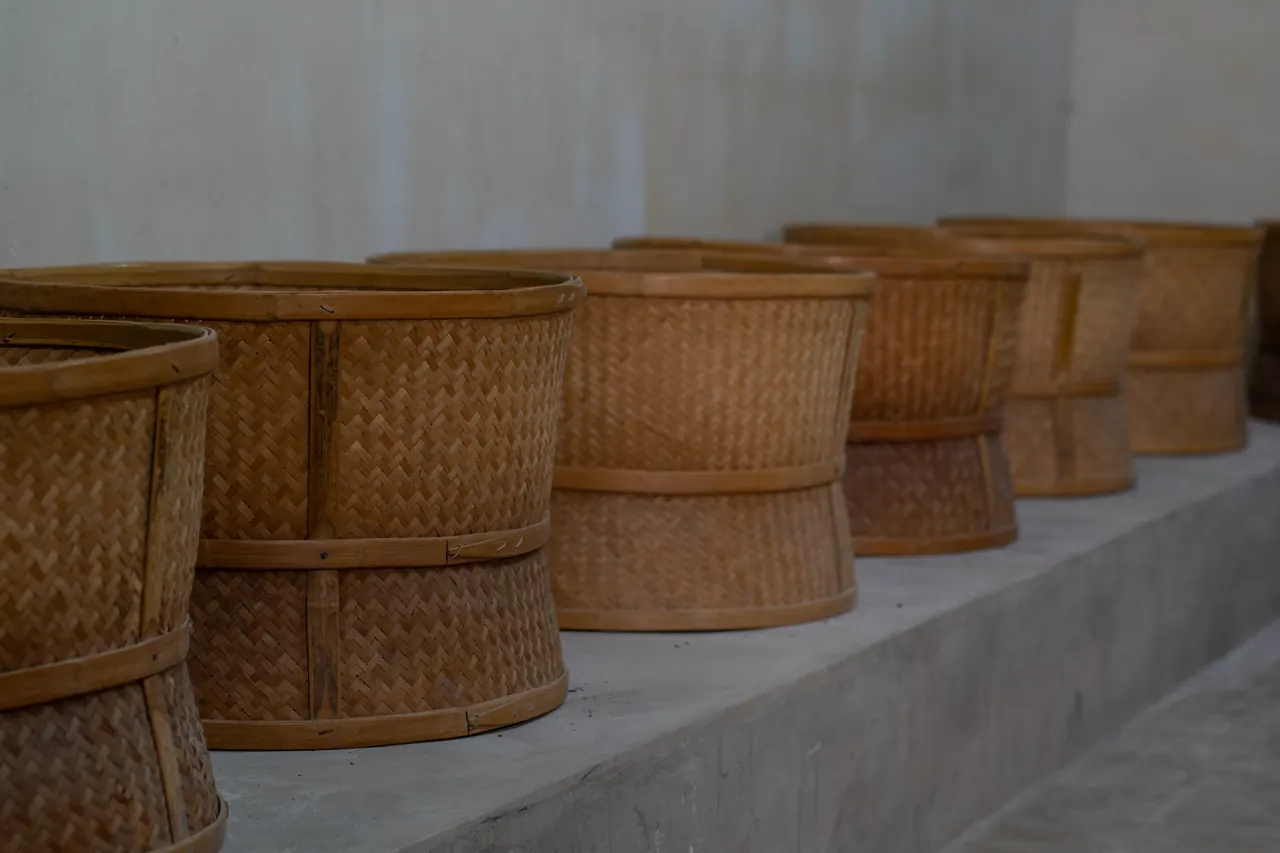
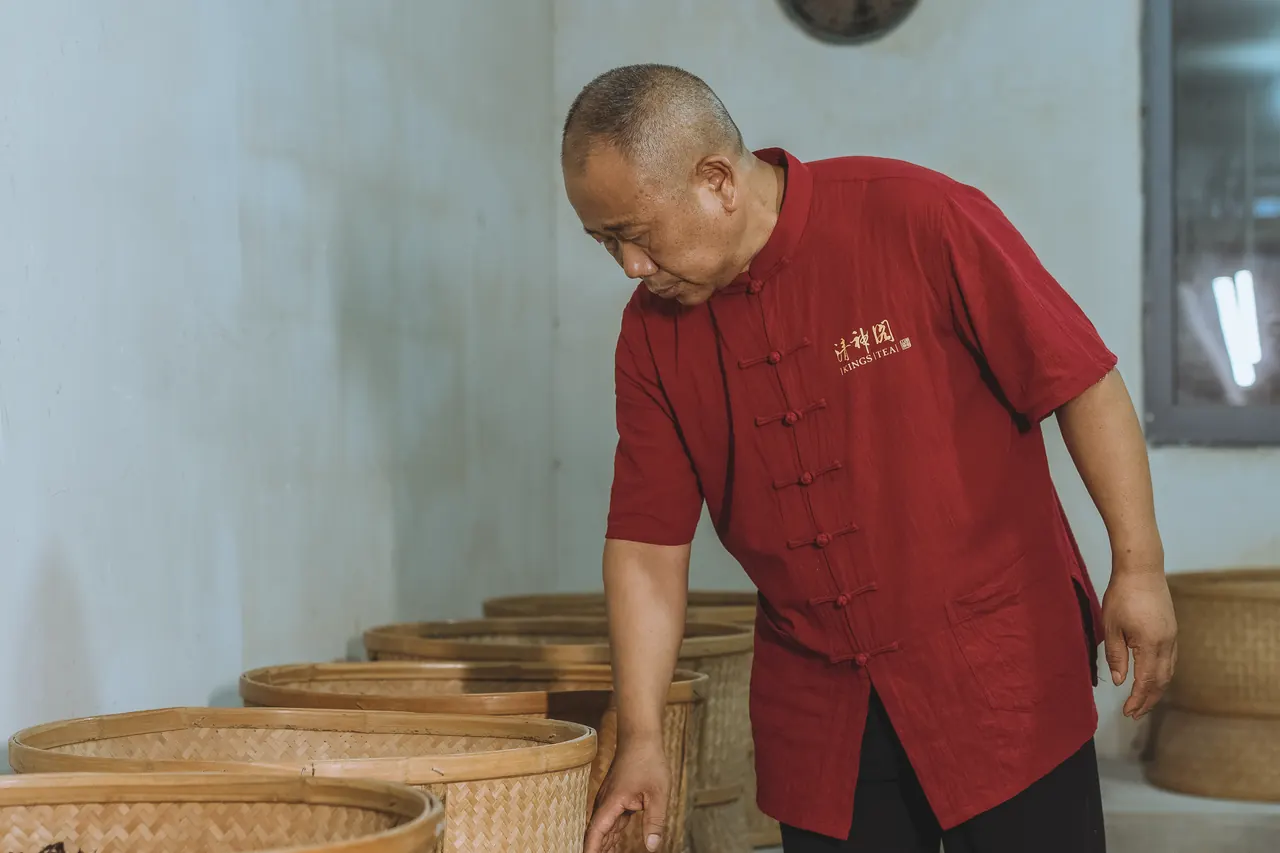
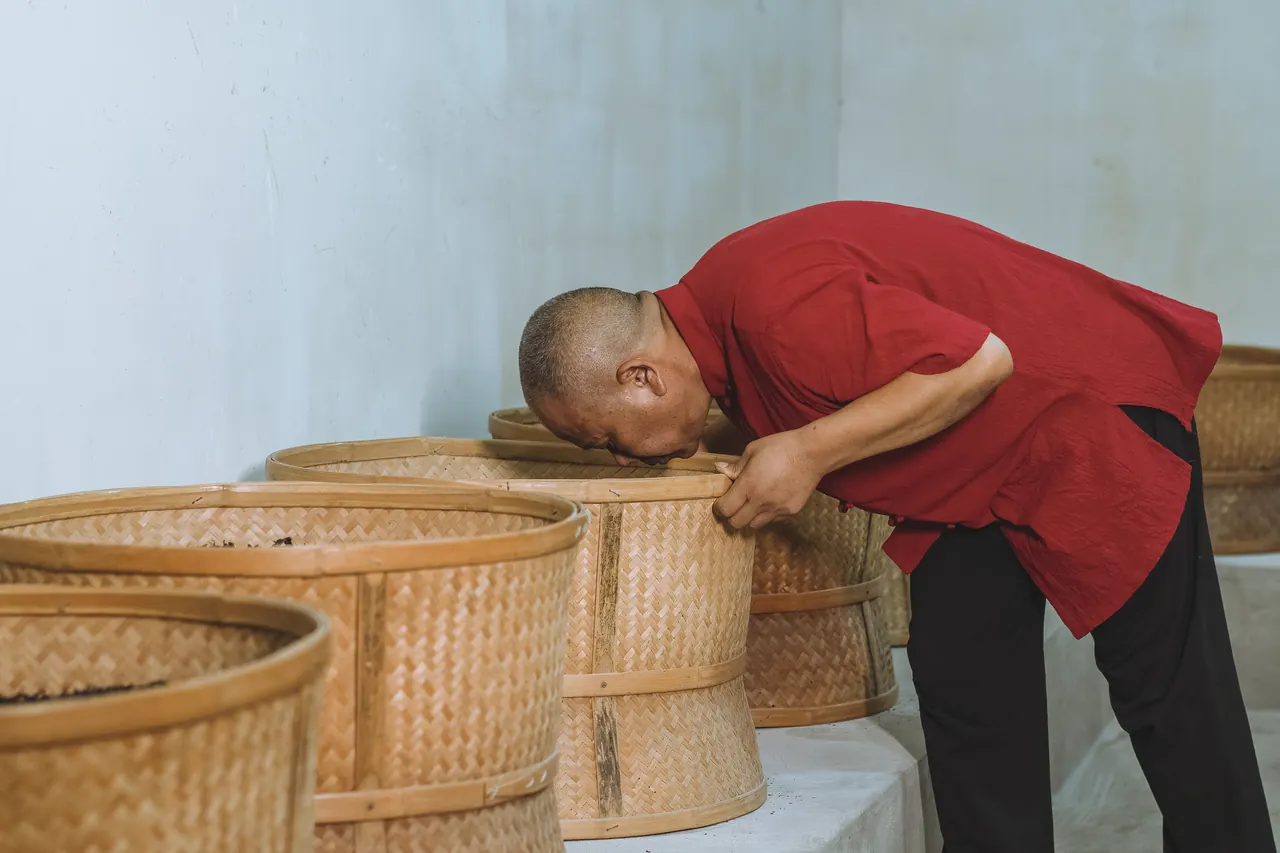
Bamboo roasting baskets in our charcoal roasting room, August 2025.
How the tea is made
Six stages, photographed at our factory.
Every photograph below was taken at Kings Tea in August 2025. The order follows the work itself.
01
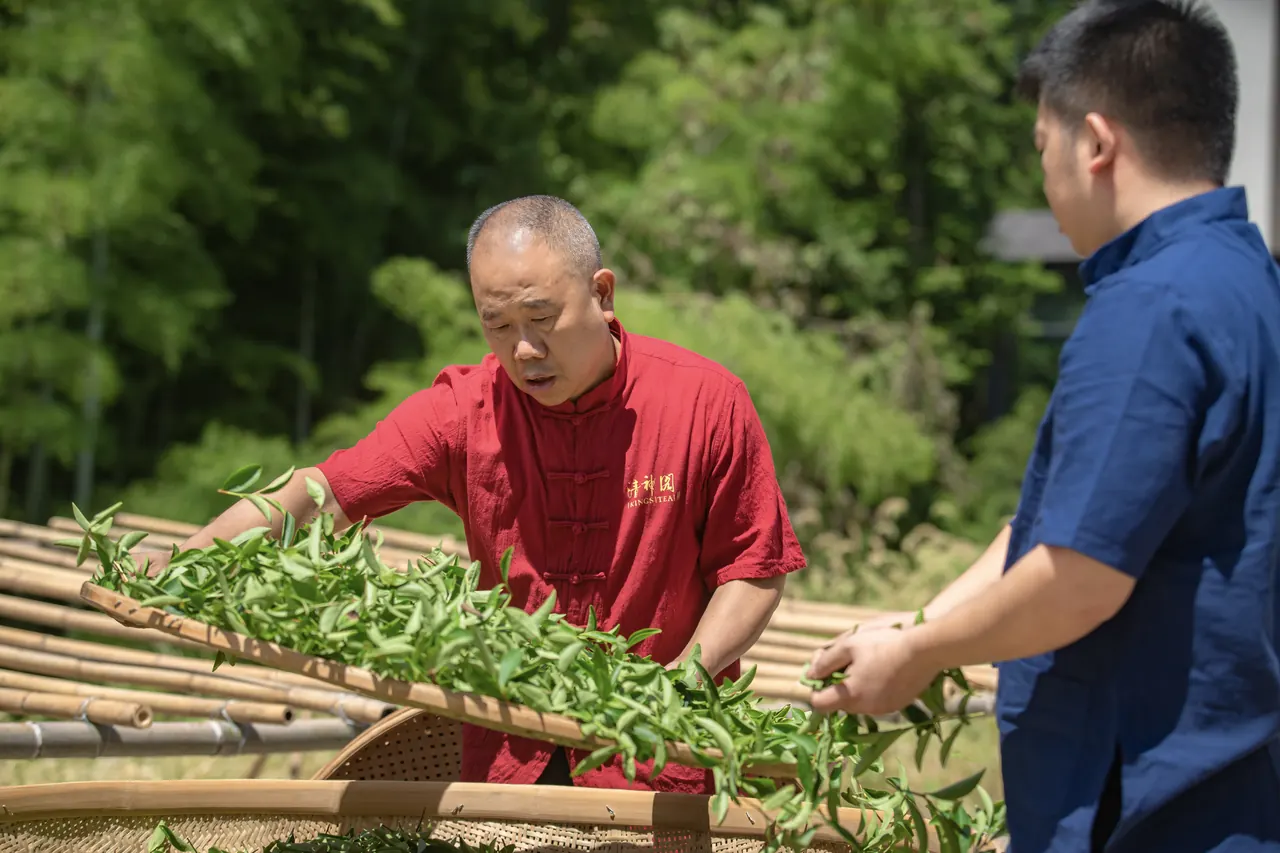
Sun-withering
晒青
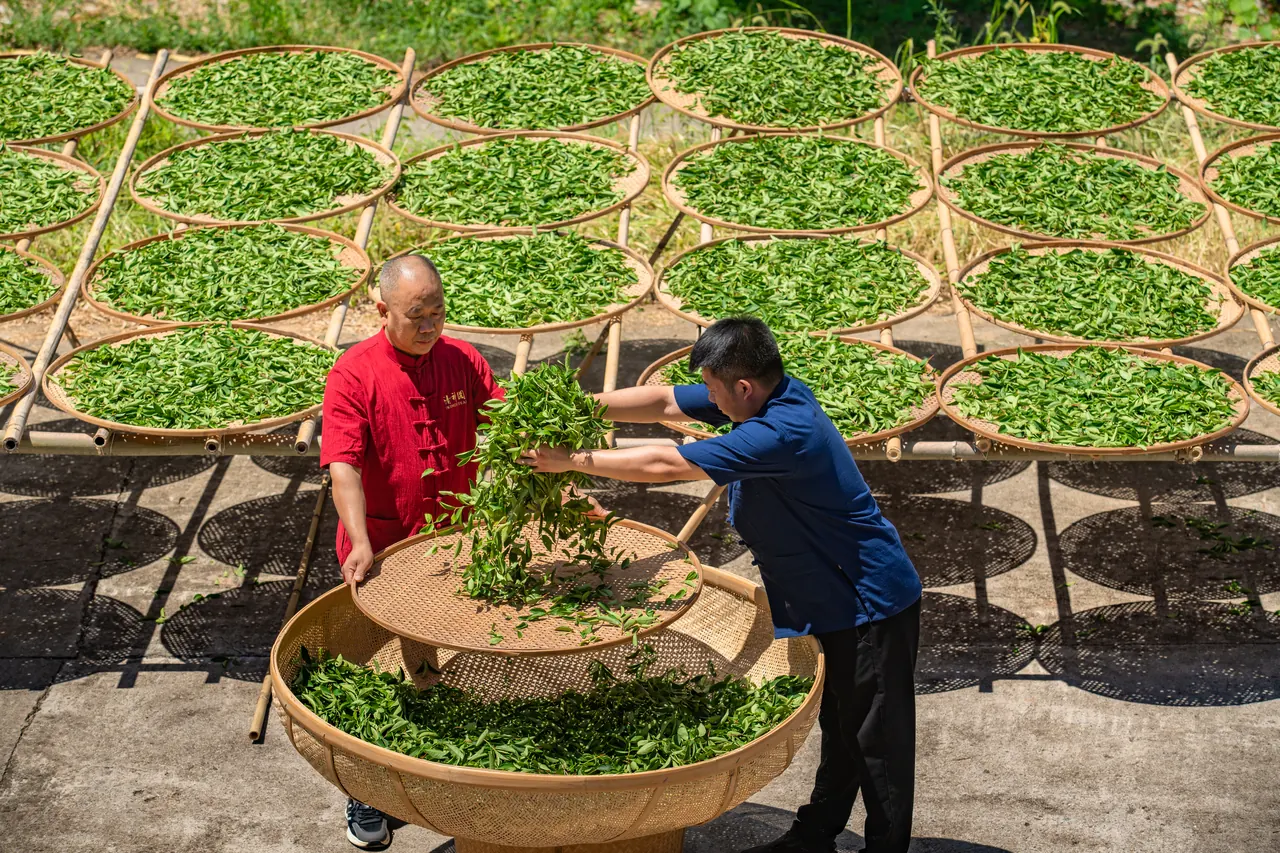
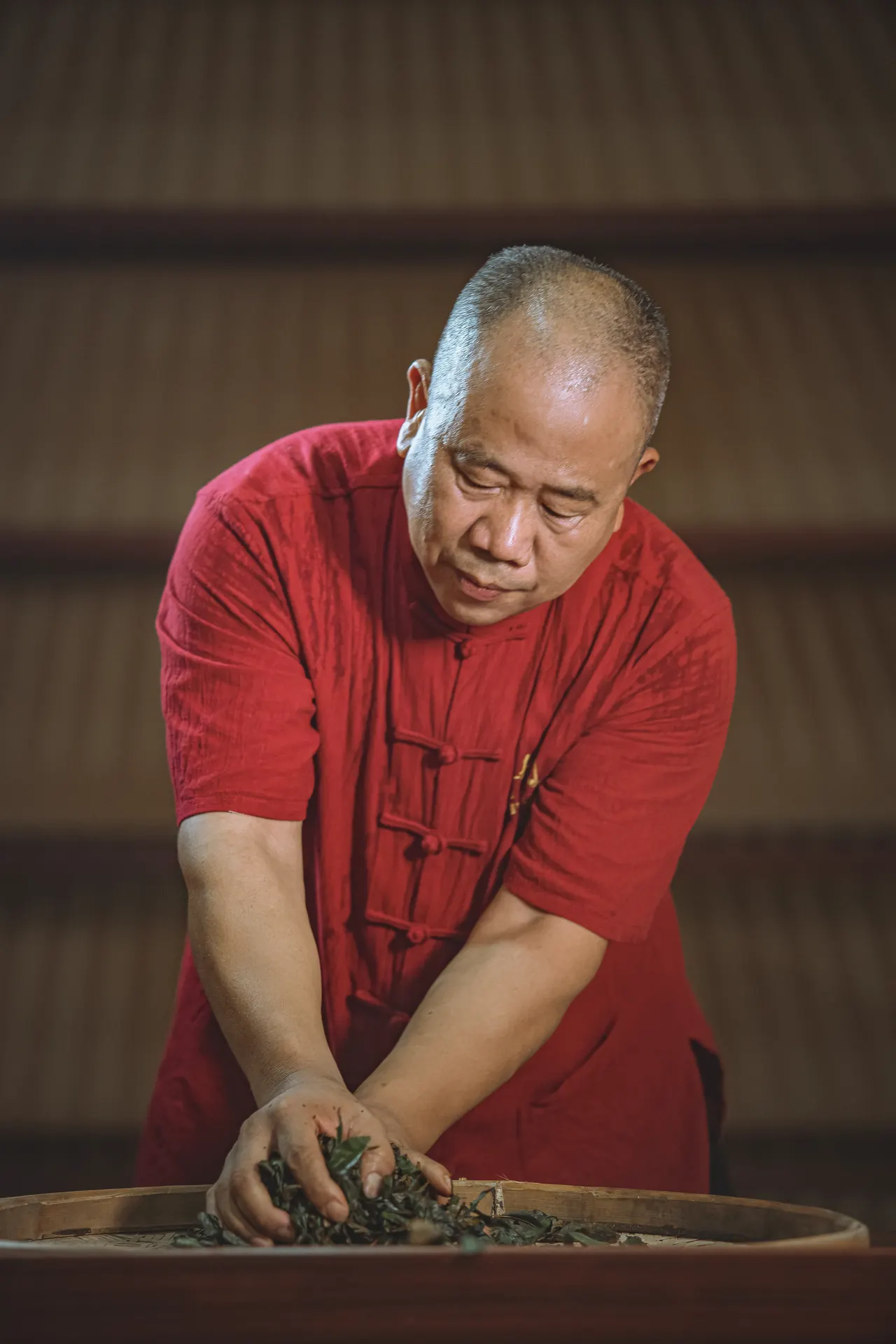
Fresh leaf is spread thin on round bamboo trays and moved between sun and shade until it softens and gives up some of its water. Too much sun scorches it; too little leaves it grassy. The tea maker judges by touch and smell.
02
Shaking & resting
做青
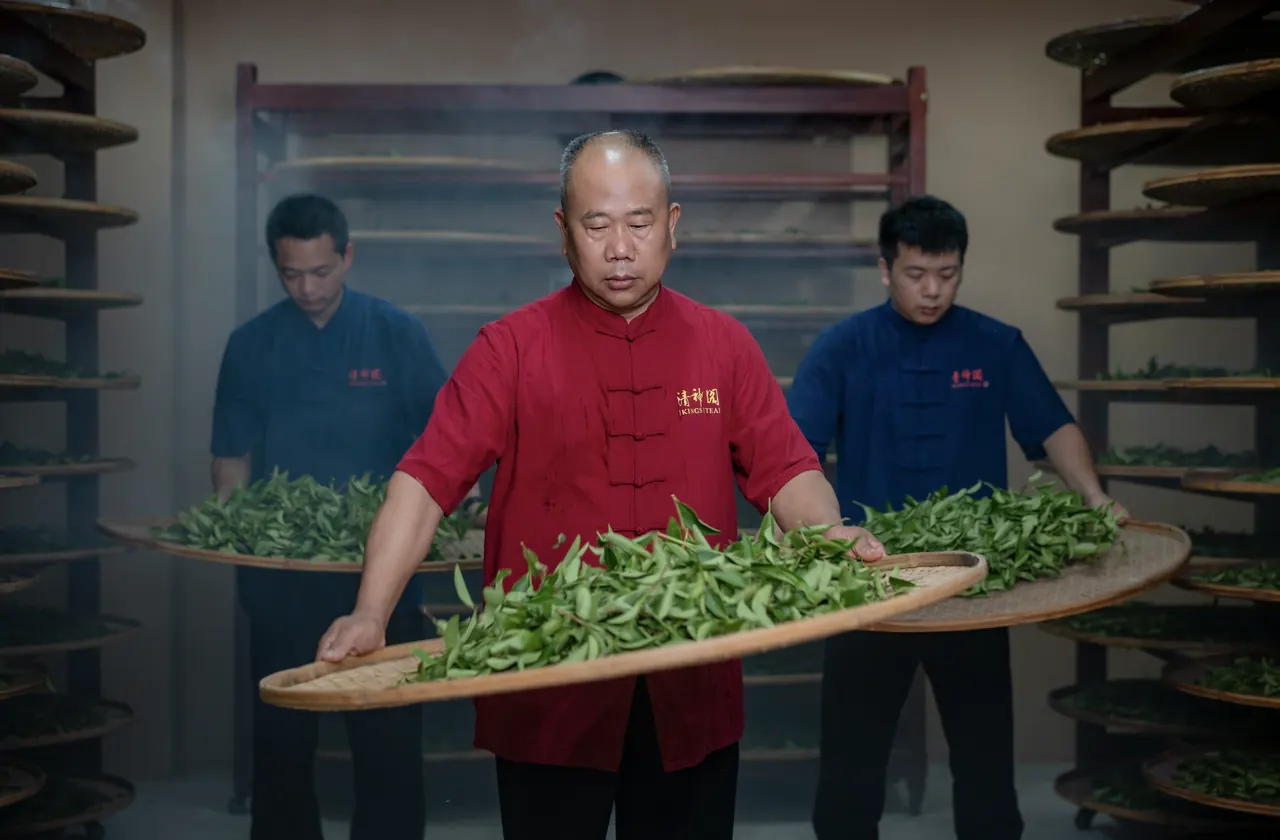
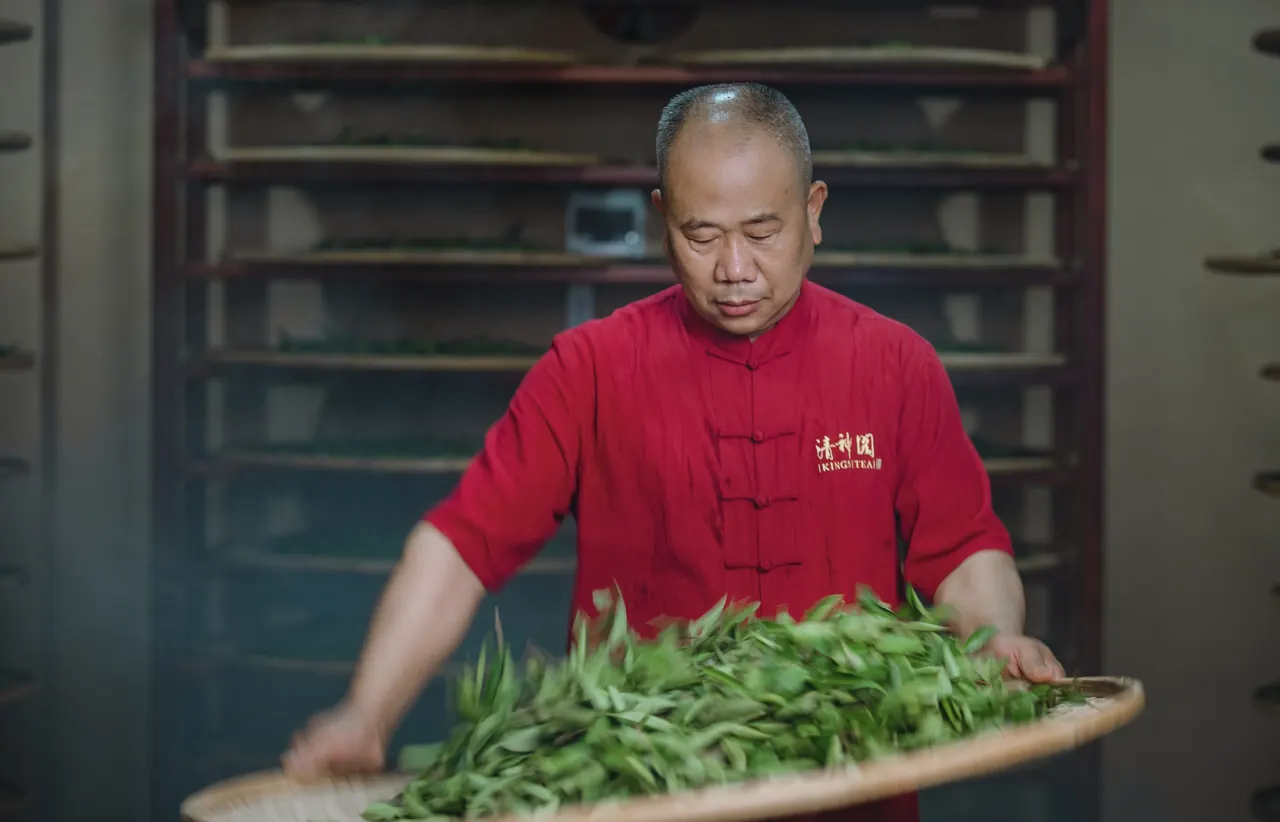
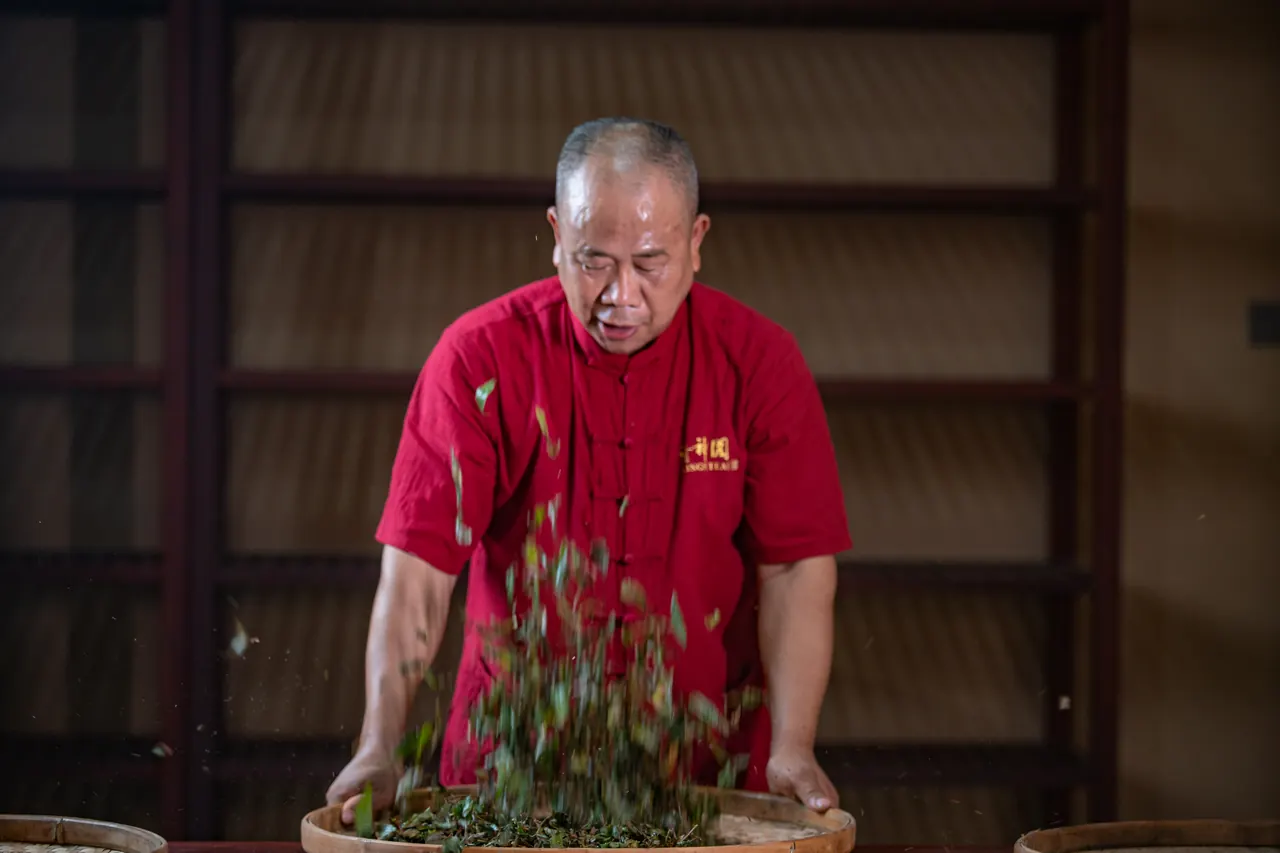
The stage that defines Wuyi rock tea. Over many hours the leaf is tossed on bamboo trays and left to rest, again and again. The leaf edges bruise and slowly oxidise while the centre stays green, and the scent shifts from grassy to floral.
Tea makers here say 看天做青,看青做青 — read the weather, read the leaf. There is no fixed recipe.
03
Firing
炒青
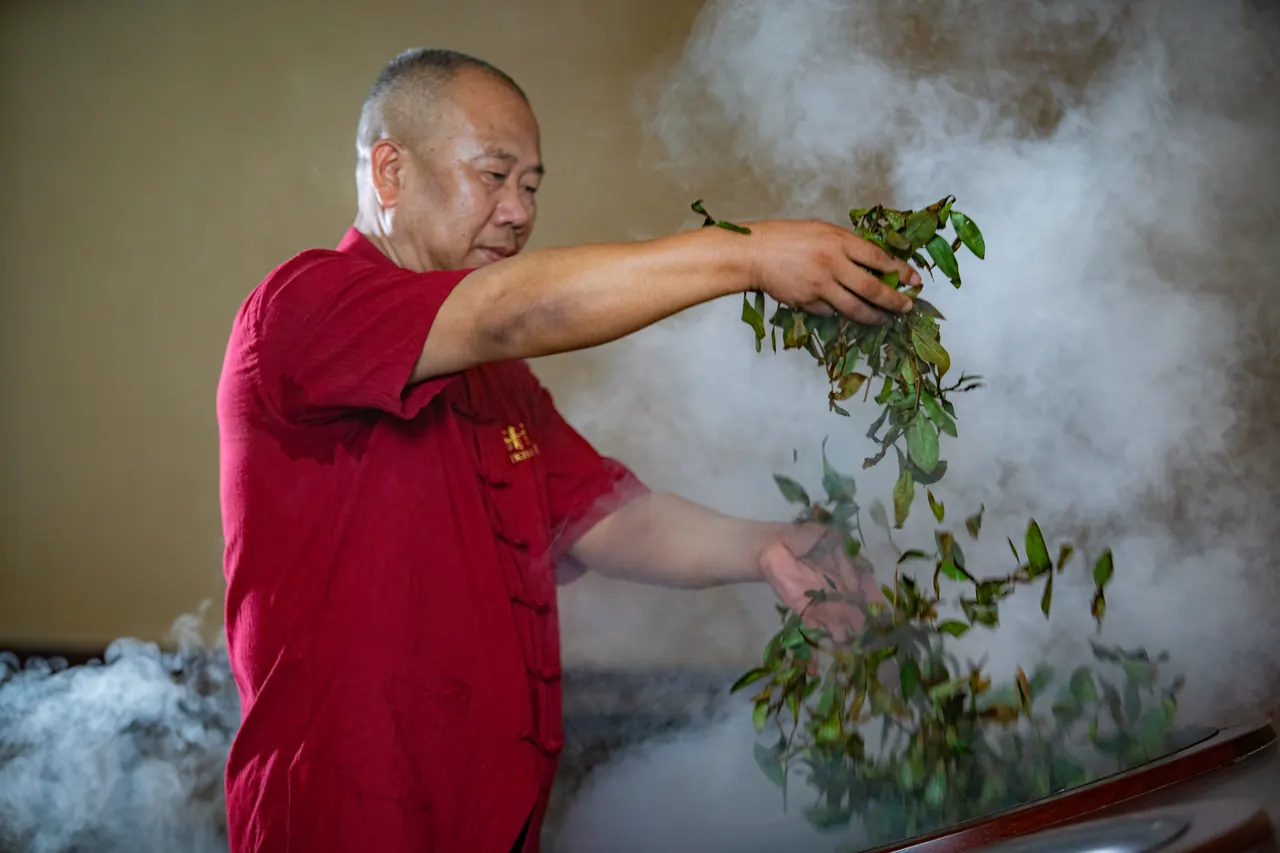
High heat stops oxidation at the moment the tea maker chooses, fixing the aroma that the shaking has built. The leaf comes off hot, steaming and soft.
04
Rolling
揉捻
While still warm, the leaf is rolled under pressure to break its cells and twist it into the long dark strips typical of Wuyi rock tea. Rolling decides how readily the tea gives up its flavour in the cup.
05
Charcoal roasting
炭焙
The dried leaf is roasted in woven bamboo baskets set over charcoal banked under ash. The heat is gentle and slow, the baskets are turned and checked by hand, and a tea may be roasted again after a rest.
Roasting shapes the depth, sweetness and keeping quality of the tea. It is the step most producers have moved to electric ovens; we keep it on charcoal.
06
Tasting
审评
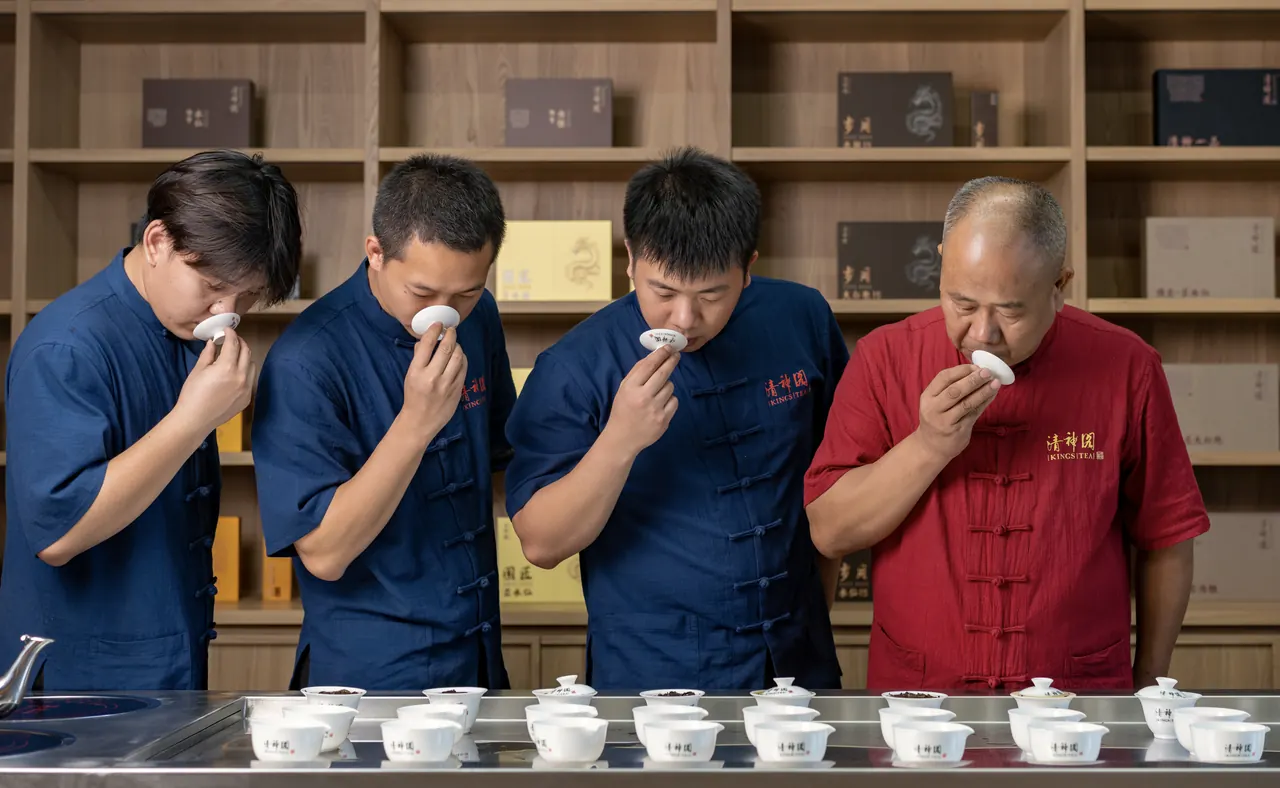
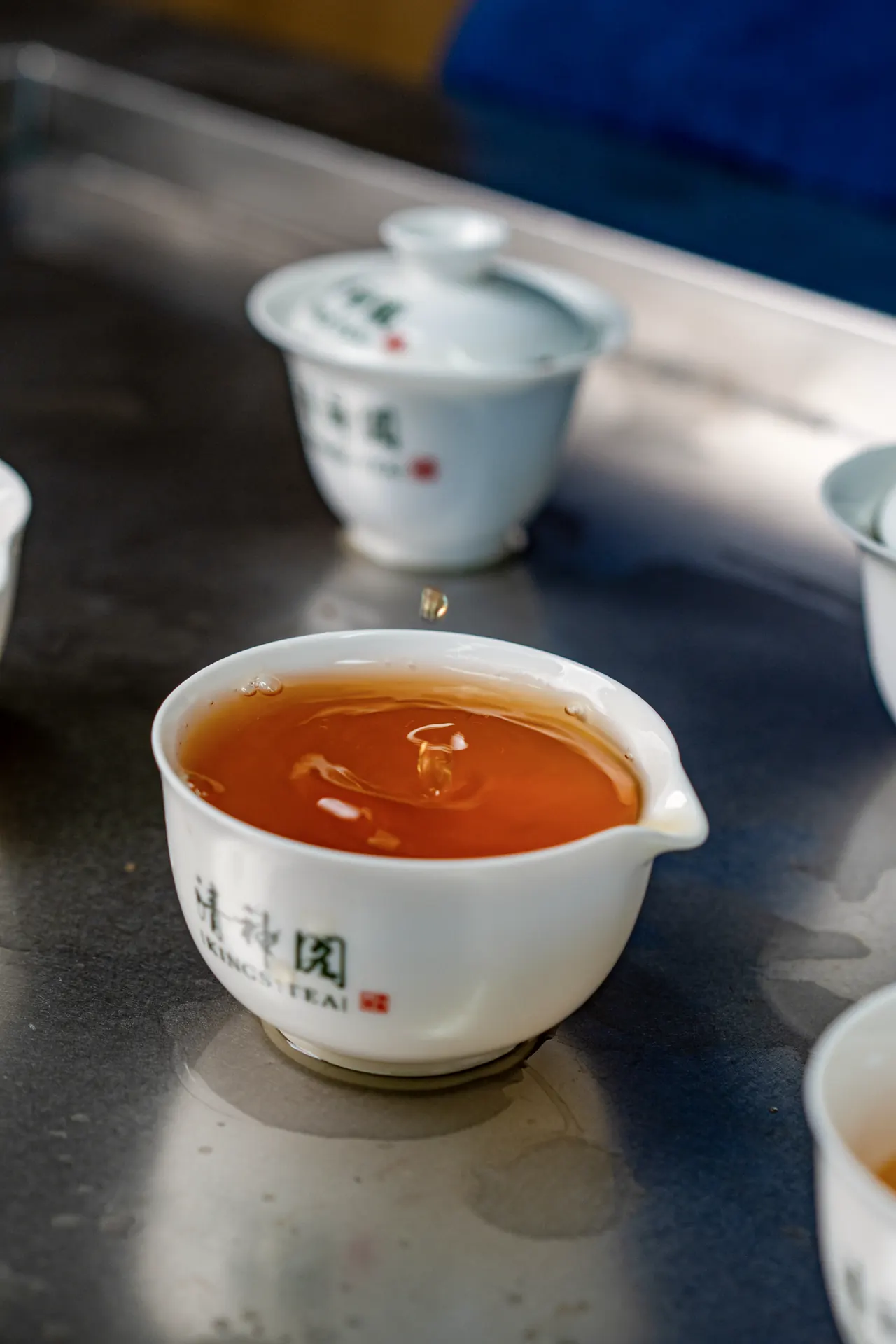
Every batch is cupped side by side — dry leaf, aroma, liquor and spent leaf — before it is graded, blended or sent back for more roasting. The tasting table is where the tea maker's judgement is checked by the whole team.
“The Wuyi way of roasting is truly the first under heaven.”
By hand and experience: banking the ash, turning the baskets, judging by smell
By thermostat and timer
Time
Slow. The traditional long final roast (炖火) is described at around 85 °C for about seven hours3
Usually quicker
Skill required
High; part of the heritage technique
Lower; easier to repeat at scale
At Kings Tea
Used for our Wuyi rock tea
—
Competition record
Liu Dexi at the judging table.
Wuyishan holds tea competitions every year. These results are from our company records.
Results recorded by Kings Tea
Date
Result
Competition
Jun 2005
Five-star International Tea King (Wuyi famous bush)
China International Star-rated Tea King Contest, Xiamen
Jul 2006
Gold award, Rou Gui
Wuyishan Zhengyan Cup Tea King Contest
Jul 2007
Champion, Rou Gui and Shui Xian
Wuyishan folk tea competition (Yuyuan Cup)
Jun 2008
Special Prize, Rou Gui
Wuyishan spring tea competition
Nov 2008
Special Gold award, Da Hong Pao
China (Guangzhou) International Tea Expo
Dec 2012
Champion, Rou Gui
Cross-Strait folk tea competition
Sep 2014
Champion, Rou Gui
Wuyishan Tea King Contest
For the 2026 Special Prize for our Da Hong Pao blend, see the entry record.
Questions
The craft, answered.
Is Wuyi rock tea making officially recognised heritage?
Yes. The Wuyi rock tea (Da Hong Pao) making technique was named to China's first national list of intangible cultural heritage in 2006 (item VIII-63). In 2022 it was among the techniques inscribed by UNESCO as "Traditional tea processing techniques and associated social practices in China".
Who is Liu Dexi?
Liu Dexi (刘德喜) is the factory director and chief tea maker at Kings Tea, a post he has held since February 2005. On 20 March 2015 the Wuyishan Municipal People's Government named him one of six second-batch representative inheritors of the Wuyi rock tea (Da Hong Pao) making technique (Wu Zheng Zong [2015] No. 34). This is a municipal recognition, not a national one.
Why is charcoal roasting important?
Roasting over a bed of ash-covered charcoal is the step that gives Wuyi rock tea much of its depth. The heat is low and slow, adjusted by hand, and a tea may be roasted more than once. Many producers now use electric ovens, which are quicker and easier to control. Read the comparison.
Is every step done by hand?
We do not claim that every step is done by hand. Hand skill and judgement matter most at the stages that decide the tea — withering, shaking, firing and roasting. The photographs on this page show our team at each stage in August 2025. Ask us how a particular tea or lot was made.
For tea shops, importers & tea clubs
Good tea begins with a conversation.
Tell us which teas you are looking for and where you are based. We will suggest what to taste and share the certificates and reports that apply to it.